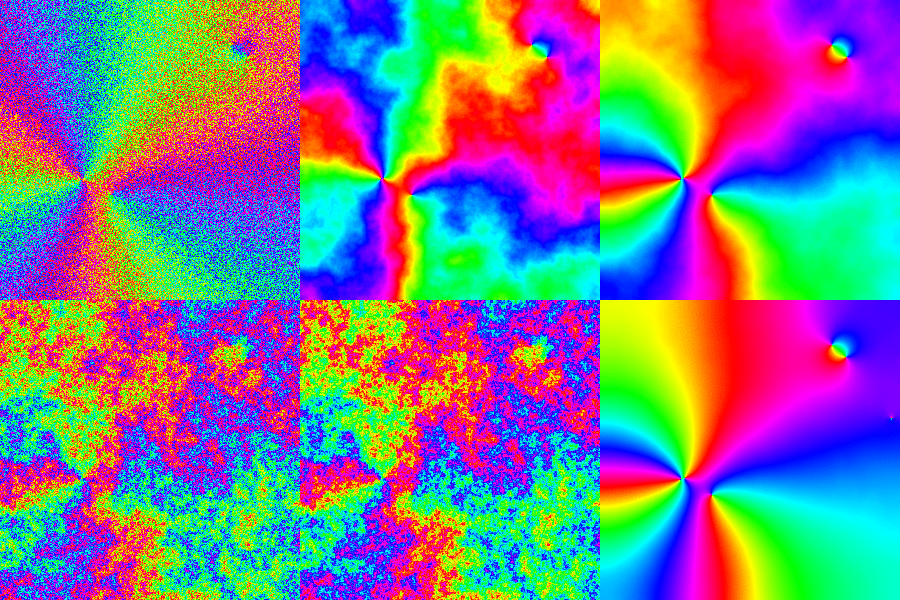
- Vector fields
LandA,|L|=1; Ais chaotic;Linteracts withA:E = Uin * (L*A)^2;Lhas gradient energy:E = Ugr * ((dL/dx)^2 + (dL/dy)^2).
One can start from some initial distribution of L and look for the
equilibrium distribution of L. Ugr is a control parameter.
There are a few non-trivial effects which can be seen here:
- Larkin-Imry-Ma state: if gradient energy is strong then
Lis uniform, if gradient energy is weak,Lis chaotic (followingAfield). Between these limits there is an intermediate state whereLform some structures of sizeRwhich can be estimated in the following way:
By rotating a uniform area of size R (with N \propto R^2 impurities)
you can decrease interaction energy by \propto Uin/sqrt(N) \propto Uin/R and
increase gradient energy by \propto Ugr/R^2. There is an
optimal R where these two energies are equal: R \propto Ugr/Uin.
- You can choose one of two different interactions:
E = Uin * (L*A)^2orE = Uin * (L*A). If you decrease gradient energy and then increase it again, in the first case you will return to the original distribution ofL(uniform or with vortices), in the second case you will have lots of random vortices. The reason is that in the first case interaction withAwill never rotateLmore then 90 degrees and information about original orientation will survive.
picture1: start from uniform L, gradient energy Ugr goes up-down-up: https://slazav.xyz/tmp/lim1u.gif
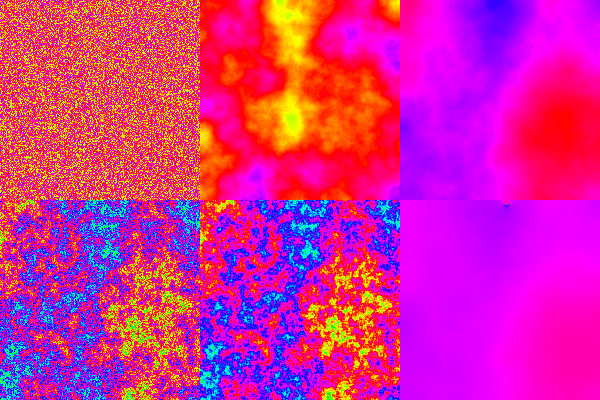
picture2: start from L with a vortex, Ugr goes up-down-up. The vortex is stable: https://slazav.xyz/tmp/lim1v.gif
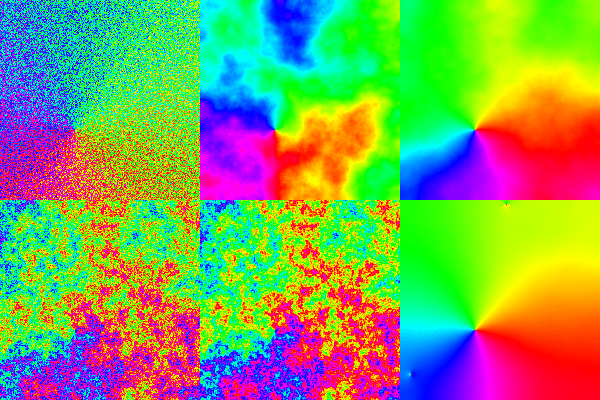
picture3: start from L with a gradient of phase: https://slazav.xyz/tmp/lim2s.gif
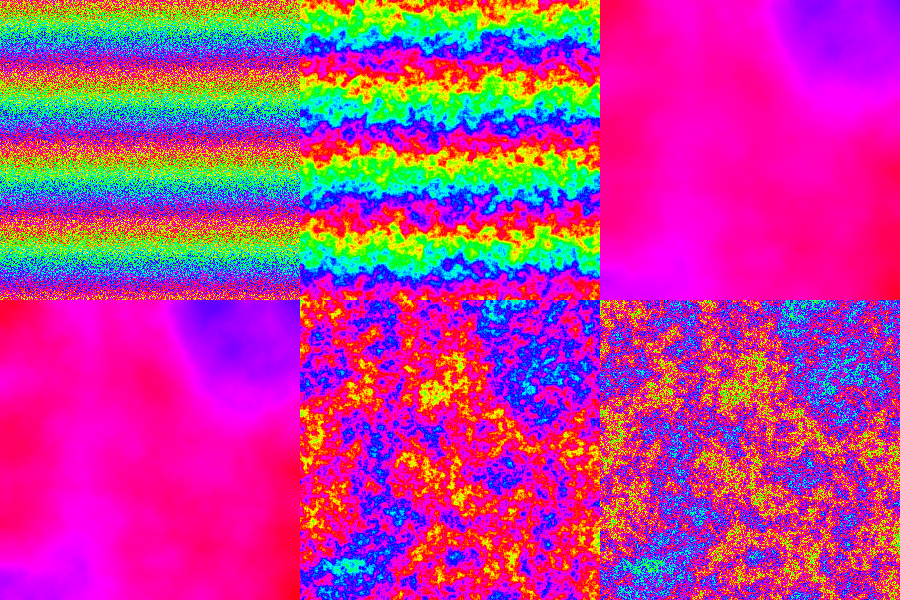
picture4: start from L with a few vortices: https://slazav.xyz/tmp/lim3s.gif